I lead hardware engineering at WitBlox. We make Blox: small electronic blocks that plug into each other, so a student can join a power Blox, a sensor Blox and an output Blox and have a working circuit. Every new Blox is a new PCB, and it has to fit the ones we already sell.
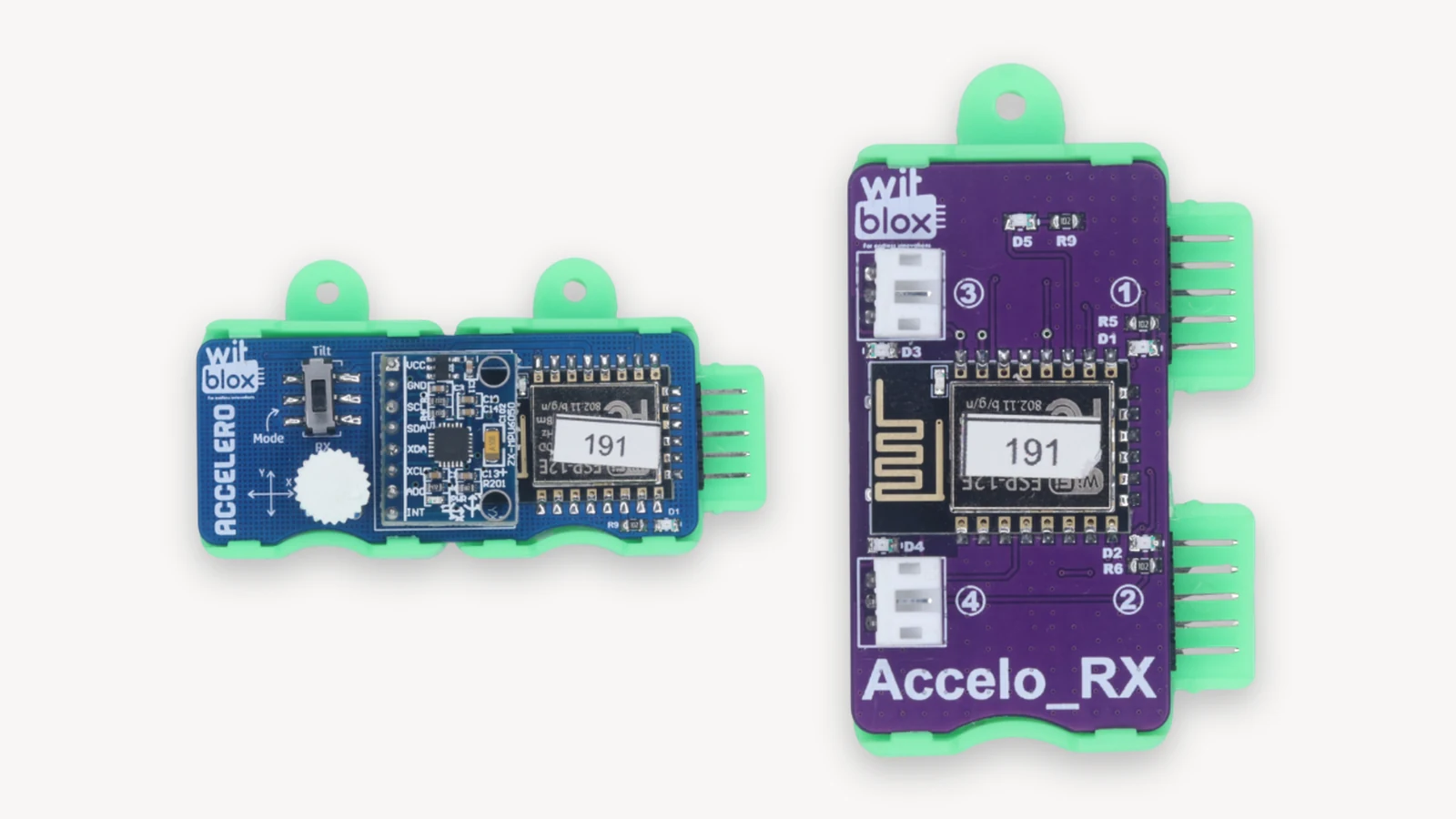
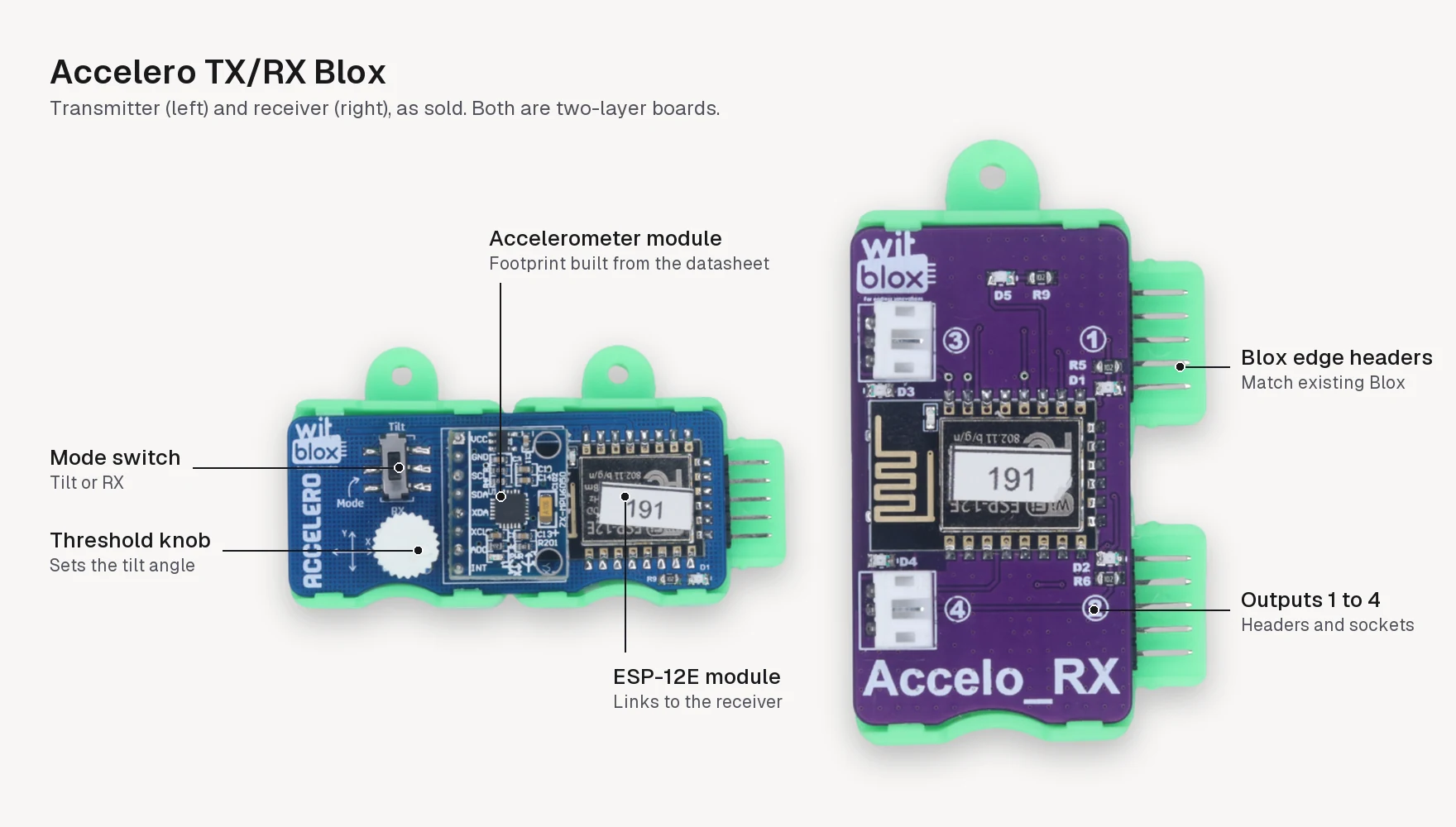
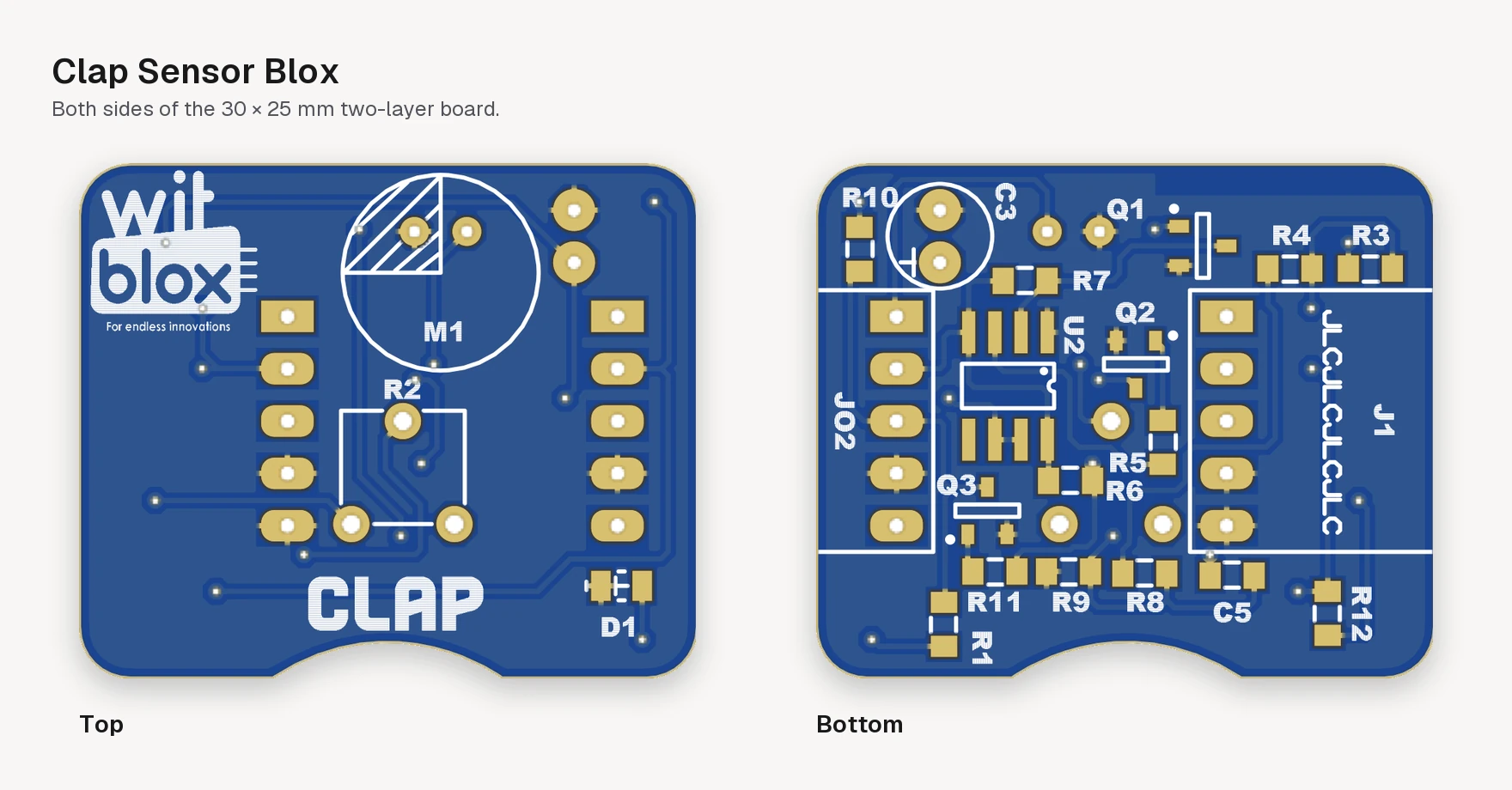
We have used Embedr on a few products that are now in production. Two of them are the Accelero TX/RX Blox and the Clap Sensor. This post is about how those two product designs were made and what has changed for us since.
What we gave Embedr
For both designs I gave Embedr two things.
- Our existing Blox designs. A new Blox has to connect to the rest of the range, so the headers must sit in the same places. Embedr read the existing designs to learn where they go.
- Datasheets for the parts we had already picked. We source from a vendor we know, and we chose the components ourselves. We did not use Embedr for component selection on these designs.
What Embedr did
From those inputs, Embedr did the PCB work:
- It made the footprints from the datasheets.
- It made the 3D models as STEP files, also from scratch.
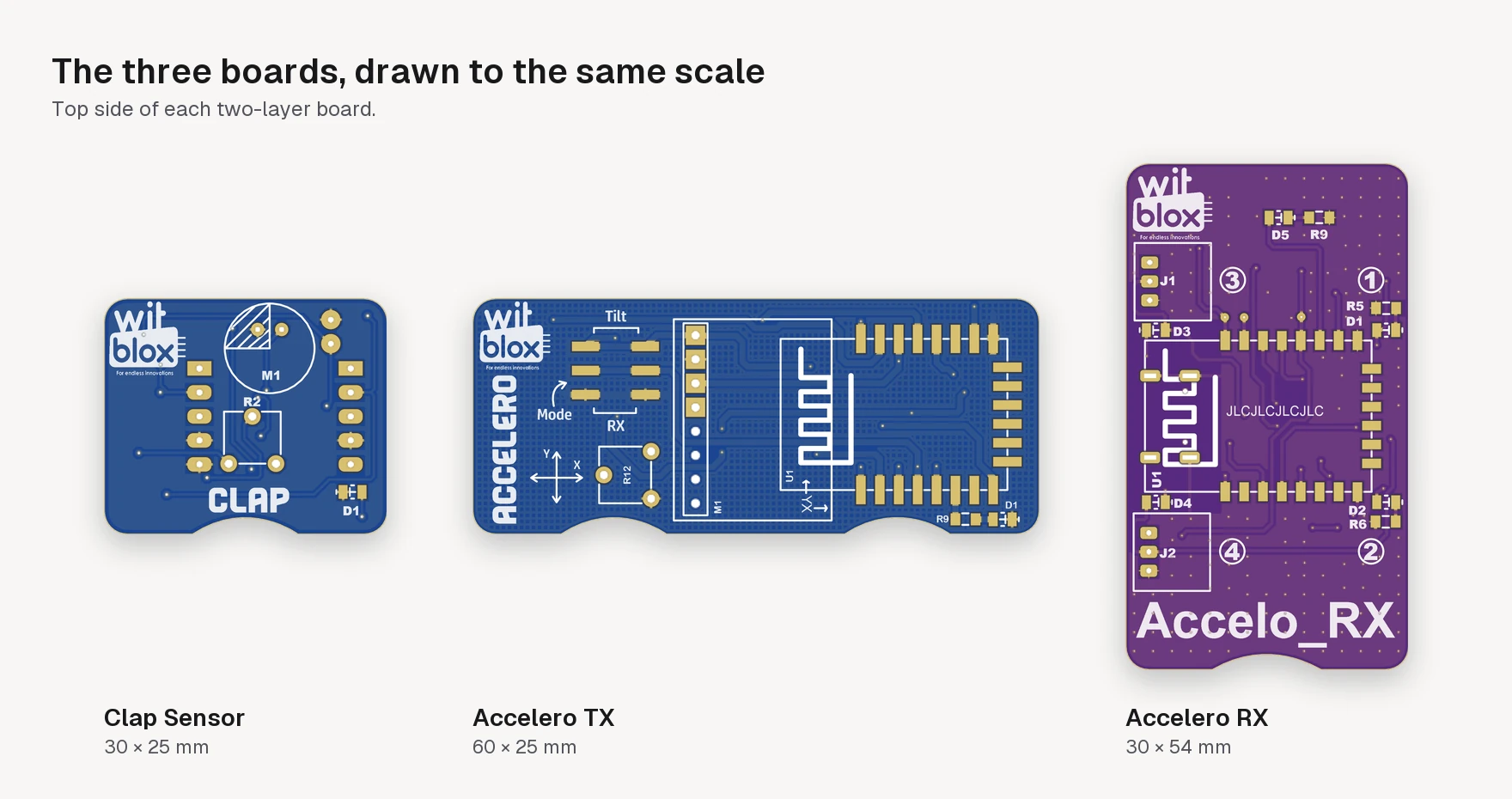
- It laid out the boards for both designs. That is three boards in all, each with two layers.
- It ran the design checks on the finished layouts and validated them.
I reviewed both designs afterwards. I did not have to change anything.
Fewer respins
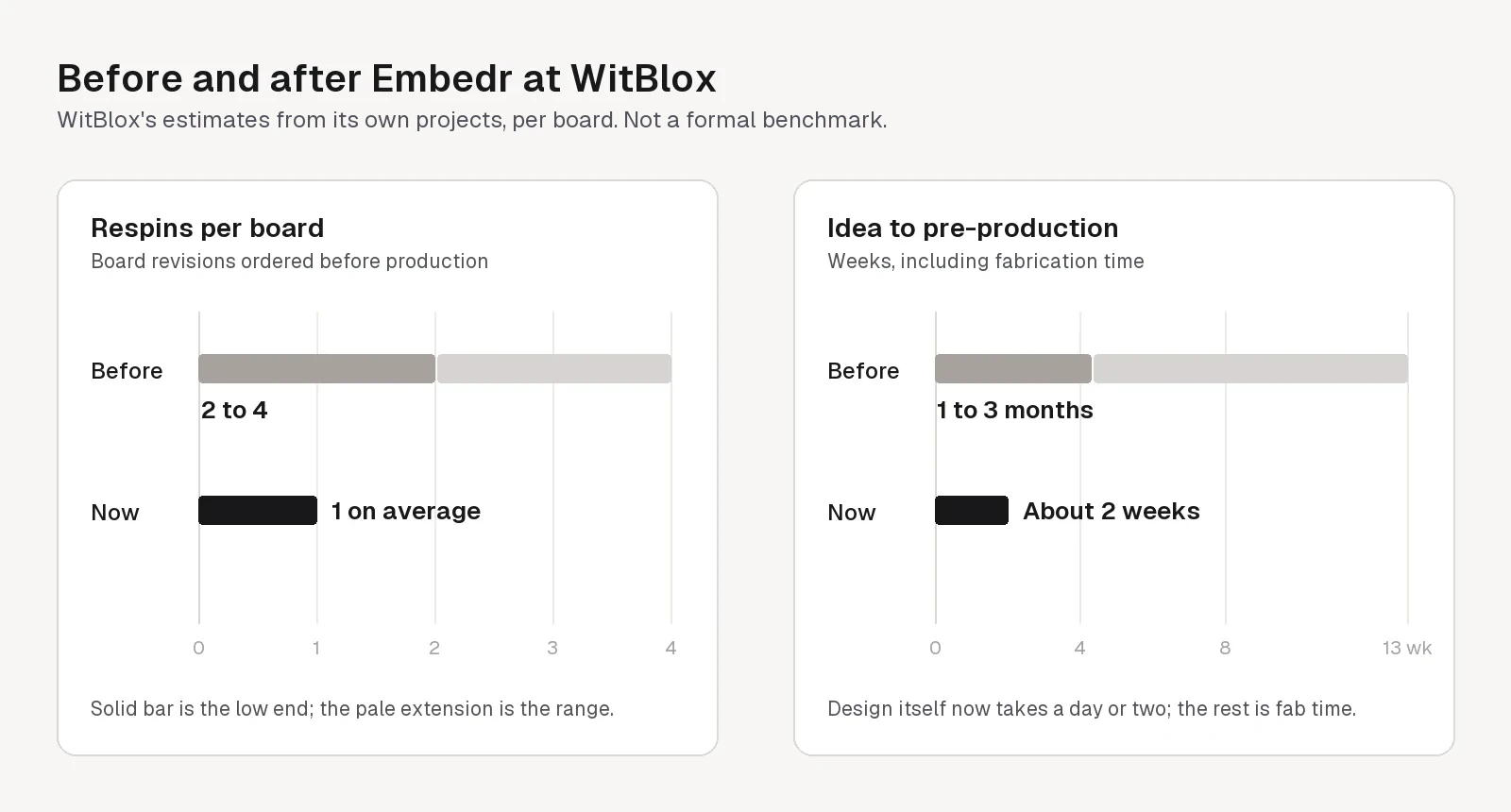
Before Embedr, we designed our boards in Proteus, and a board took two to four respins depending on how complex it was. Some of those respins had good reasons: the scope changed, or we wanted to bring the cost down. Others were plain mistakes, such as a footprint that was the wrong size, or one that was mirrored.
We now average one respin per design. Embedr also helps in the research and scope phase, so it is easier to get the scope clear before layout starts. And we have not had a wrong-size or mirrored footprint since we started using it.
From months to weeks
Getting a board from idea to just before production used to take us one to three months, depending on the project. It is now about two weeks, and most of that is waiting for the boards to come back from fabrication. The PCB design itself takes a day or two.
| Before | Now | |
|---|---|---|
| Respins per board | 2 to 4 | 1 on average |
| Idea to pre-production | 1 to 3 months | About 2 weeks: 1 to 2 days of design, the rest is fab time |
| Wrong-size or mirrored footprints | Behind some of our respins | None so far |
Where we are now
We have adopted Embedr for PCB design, and we use it for every new PCB project as it comes in. The Accelero TX/RX Blox and the Clap Sensor are two of the products made this way. Both are in production and listed on the WitBlox store.